


Índice de títulos de CODEPEH Documents in English
| Title | Publicación | |
|---|---|---|
|
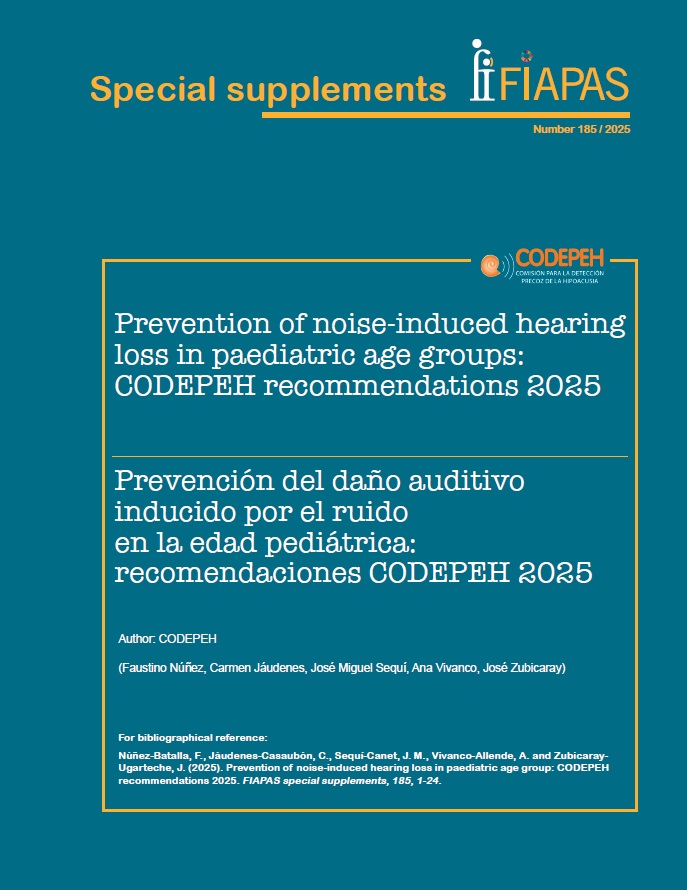
This CODEPEH document, together with the 2025 brochure and flyer, addresses the issue of noise-induced hearing loss, which is an increasingly concerning public health issue due to its high prevalence and the general lack of awareness regarding prevention. It is particularly troubling the impact on the paediatric population and the risks of developing permanent deafness. […] |
2025 |
|
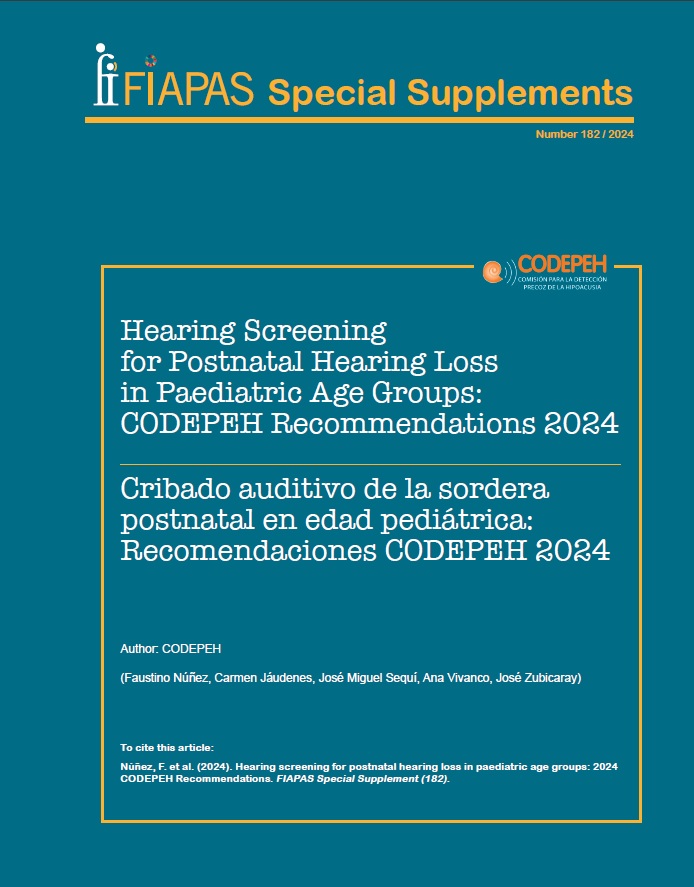
This CODEPEH document, which complements the 2023 work, aims to set tandardised protocols to promote and improve the quality of early detection, diagnosis and treatment of hearing loss.This should be considered not only an important health problem, which needs to be assessed and treated, but also a serious educational concern, due to the implications it has, […] |
2024 |
|
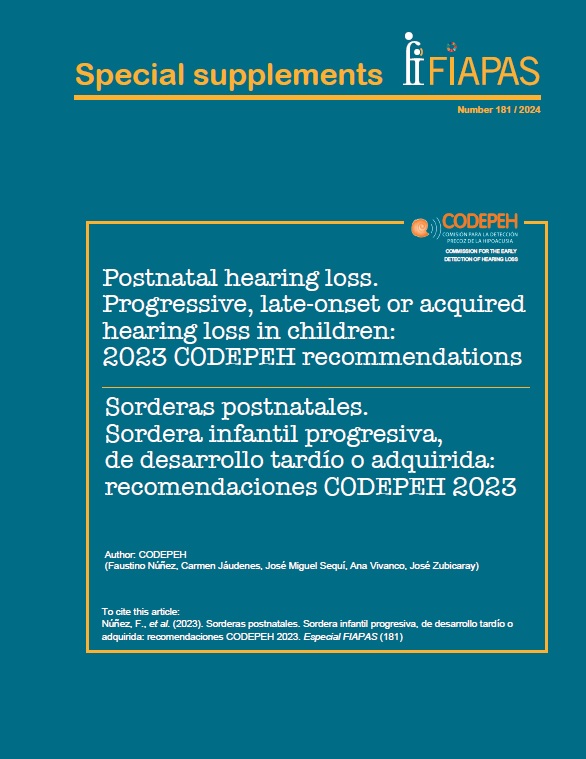
This CODEPEH document aims to provide guidance on the need for protocols for the early detection of postnatal hearing loss. New lines of application of the early childhood hearing screening programme are necessary, configured as a continuous hearing prevention service, both to monitor cases that do not pass the neonatal screening or have risk factors […] |
2024 |
|
This CODEPEH document analyses and aims to provide answers, based on the most recent scientific evidence, on how to recruit newborns for inclusion in the screening process, what information to provide to the family prior to the test, how to improve the competencies and functioning of the team assigned to the programme, as well as […] |
2023 |
|
Approximately 40% of children with deafness have an additional developmental disorder or major medical problem, which may delay the age of diagnosis of hearing loss and/or require intervention by other professionals. This situation is referred to as “deafness with added disability” (AD+). The reason why the population of hearing-impaired children is more likely to have […] |
2022 |
|
In order to complete the work started in 2018 in which the child hearing screening process was reviewed and updated, in its level 1 Detection, this document completes the review and update of the early detection programs for child deafness, focusing on the phase diagnoses, decision-making regarding treatment and the follow-up process, taking the most recent scientific evidence […] |
2020 |
|
There is significant incidence and prevalence of secretory otitis media (SOM) in children, although there is evidence that only a minority of professionals follow the recommendations given in the guides for its clinical management. In order to improve the diagnosis and treatment of SOM, to prevent and/or reduce its consequences on the child’s development, the […] |
2017 |
|
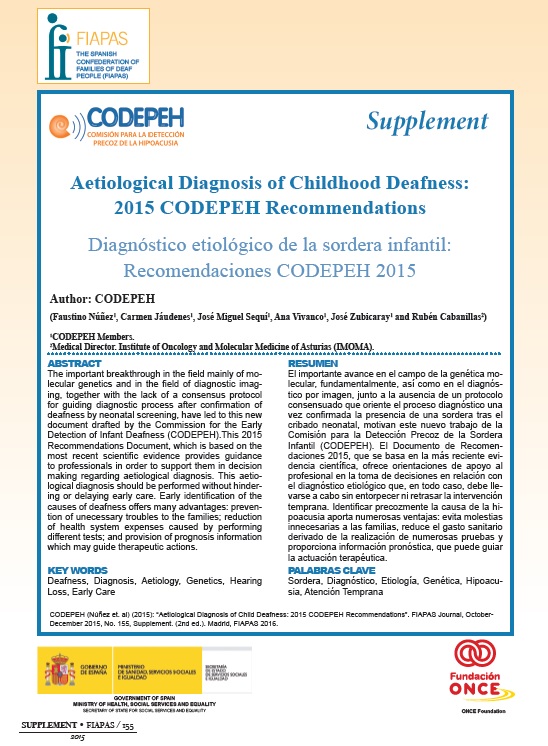
Significant advances fundamentally in the field of molecular genetics, as well as in imaging diagnosis, together with the lack of a consensus-based protocol to guide and complete the diagnostic process once neonatal screening has confirmed hearing loss, led to this work by the Commission for the Early Detection of Deafness (CODEPEH), which is another step […] |
2016 |
|
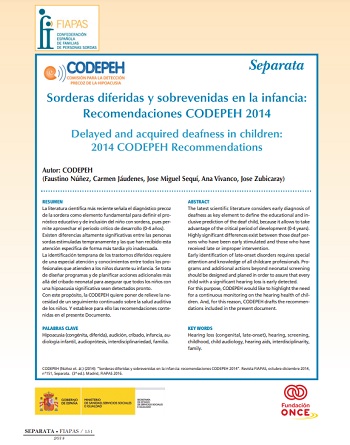
More than a decade after the approval of the Programme for Early Detection of Infant Hearing Loss for its implementation throughout the country, by agreement of the Ministry of Health and the autonomous communities, the existence of cases not detected in neonatal screening prior to hospital discharge from maternity and the early identification of late […] |
2016 |
|
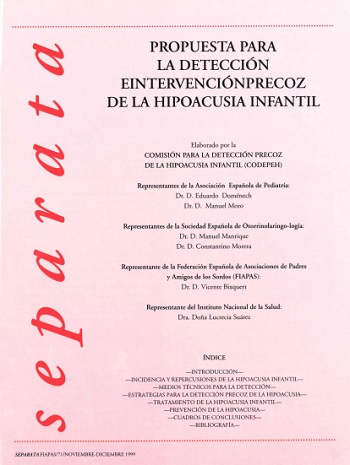
In recent years, great focus has been placed on the importance of early detection of hearing loss in children, from recommending screening in a population at risk to universal screening. Hearing impairment in children meets all the requirements of diseases that are subject to collective testing for neonatal detection. The top five should at least […] |
1999 |